Rain is coming, the days are shorter, and mud season can sneak up fast in the Santa Ynez Valley. If you own or plan to buy a horse property here, you want your barns, arenas, and pastures ready before the first big storm. You work hard for this lifestyle, and your horses depend on you to keep things dry, safe, and running smoothly. In this guide, you’ll get a simple, local plan to winterize barns, water systems, footing, fencing, and daily care, plus a seasonal checklist and when to call a pro. Let’s dive in.
Santa Ynez winter at a glance
Santa Ynez has a Mediterranean pattern: cool, wet winters and hot, dry summers. Most rain arrives from late fall through early spring. The valley’s microclimates matter. Valley floors and south-facing slopes are usually warmer, while north slopes and low-lying frost pockets can see colder nights and occasional frost. You should also plan for heavy rain events, localized flooding, saturated soils, and occasional strong winds. Wildfire awareness remains important year-round.
What this means for your property:
- Prioritize drainage and mud control near stalls, gates, and feeding areas.
- Protect key plumbing in frost-prone spots and verify water reliability during storms.
- Keep barns dry and well ventilated without direct drafts on horses.
- Maintain a clear evacuation plan that covers both flooding and wildfire.
Barn and shelter prep
Create a calm, dry environment with good airflow. Take care of repairs early and you’ll save time and stress once storms hit.
Roofs and gutters
- Inspect shingles, flashing, and roof penetrations for leaks, including lean-tos and shed rows.
- Clear gutters and downspouts. Aim to send water 10 to 15 feet away from doors and stalls using splash blocks, rock-lined swales, or vegetated areas.
- Check eaves and drip lines so water does not pool at stall entrances.
Ventilation without drafts
- Confirm ridge vents, cupolas, and side vents are open and unblocked.
- Balance fresh air with protection from wind-driven rain.
- Watch for ammonia buildup and damp bedding, then adjust airflow and stall cleaning frequency.
Doors, windows, and weatherproofing
- Repair or replace latches and seals so openings close securely during wind and rain.
- Add weatherstripping where needed to limit drafts.
- Keep aisles and thresholds graded so water moves away from interiors.
Electrical and fire safety
- Inspect wiring, outlets, and light fixtures for moisture exposure.
- Move hay and bedding away from electrical panels and lights.
- Maintain recommended defensible space around barns per local fire guidance.
Storage and organization
- Store hay and bedding off the ground and under cover.
- Set up a dry manure or compost area well away from watercourses and downhill from paddocks.
- Stage emergency lighting, battery lanterns, and a portable generator where you can reach them quickly.
Quick barn checklist:
- Gutters clear and downspouts directing water well away from doors.
- Roof penetrations sealed; no active leaks.
- Vent openings operable; airflow without direct drafts on horses.
- Hay/feed stored off the ground and under cover.
- Electrical components protected from water.
- Emergency lights and generator accessible and tested.
Water systems and wells
Your horses need reliable, clean water through every storm. Look at supply, storage, and quality.
Protect lines and fixtures
- Check all exposed pipes, hose bibs, and trough connections for leaks.
- Insulate or protect at-risk fittings in known frost pockets.
- Ensure overflow from troughs and waterers drains to stable, non-eroding surfaces.
Pumps, power, and backups
- Test your well pump and pressure tank. Label breakers and verify weather protection at control boxes.
- If you use a generator, test it with the pump before storm season.
- Top off cisterns or storage tanks ahead of long storm cycles.
Troughs and automatic waterers
- Clean troughs and confirm float valves are working.
- Make sure any heaters are installed to manufacturer specs.
- Prevent muddy craters under waterers by adding rock or mats.
Water quality after storms
- If flooding occurs or water turns cloudy or foul-smelling, test private wells with a certified lab.
- If supply is interrupted, have spare potable water on hand for 48 to 72 hours per horse.
Keep runoff away from water sources
- Position manure and compost areas where stormwater cannot carry nutrients toward wells or streams.
- Do not direct roof runoff into septic systems or leach fields.
Pastures, arenas, and fencing
Winter footing management protects your horses and your land.
Drainage and mud control
- Map low spots, seeps, and natural runoff paths.
- Redirect water away from shelter entrances, gates, and feeding pads.
- Use sandbags or temporary diversions during large storms if needed.
Heavy-use surfaces
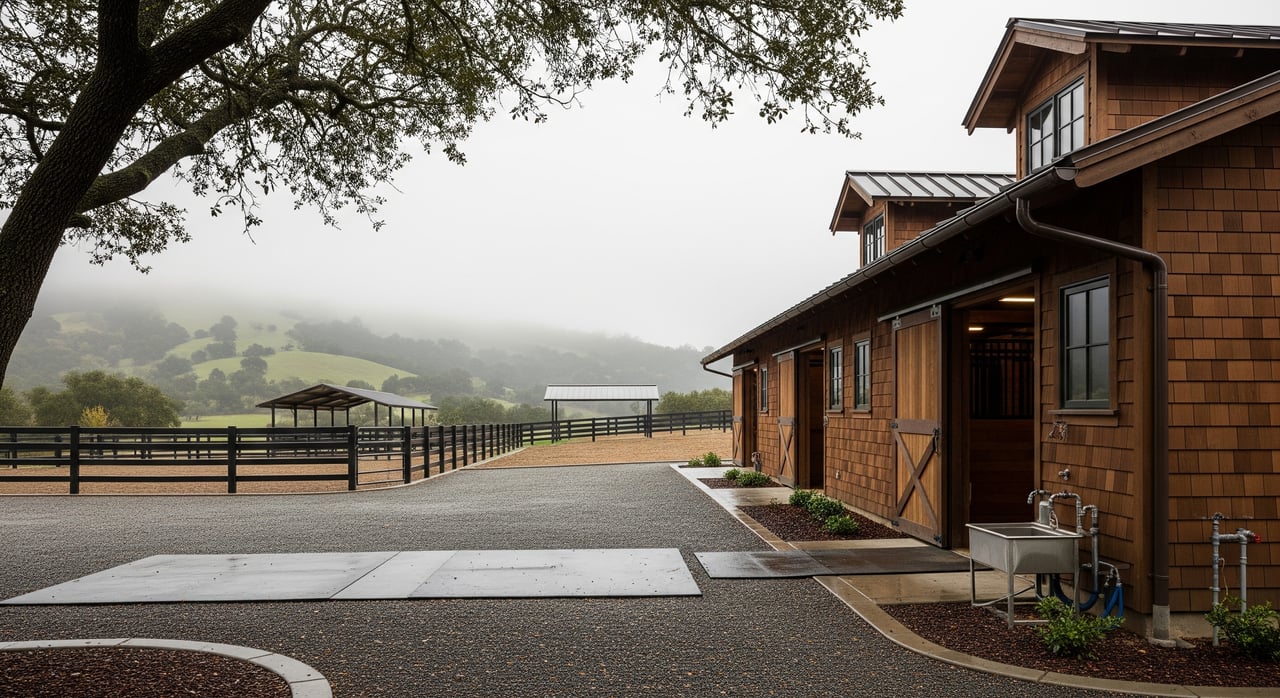
- Install rock, gravel over geotextile, or mats at gates, water points, and feed zones.
- Create a temporary sacrifice paddock during wet periods to protect pasture roots and reduce compaction.
Arena care in rainy periods
- Confirm that arena grade and drains move water off the surface.
- Close the arena after heavy rain to avoid pugging and long-term damage.
- Recondition footing with professional harrowing once soils have drained.
Manure and biosecurity
- Keep compost on a contained, well-drained base and cover it or shed water away.
- Remove manure from wet areas frequently to lower parasite pressure.
Fencing and gates
- Tighten or replace loose posts and rails before soils saturate.
- Brace posts in known wet zones.
- Adjust wire heights to minimize debris snagging during runoff.
Horse health and daily care
Winter care is about comfort, hydration, and prevention.
Hoof care
- Clean and inspect hooves often. Wet conditions can soften soles and increase thrush or abscess risk.
- Coordinate farrier visits and discuss topical treatments as needed.
Nutrition and blanketing
- Increase hay inventory to offset reduced pasture intake.
- Monitor body condition and adjust rations if exercise drops.
- Choose blankets based on each horse’s coat, condition, and weather exposure. Avoid overheating a damp horse.
Turnout decisions
- Use well-drained paddocks on wet days and avoid deep, slick areas.
- Rotate turnout to protect soils and prevent ruts near gateways.
Parasite control
- Keep to your deworming plan in coordination with your vet.
- Clean high-traffic areas to reduce manure buildup during storms.
Emergency and evacuation planning
Storms and unexpected events are easier to handle with a clear plan.
Build your plan
- Map primary and alternate evacuation routes. Practice trailer loading.
- Share plans with neighbors who can help if you are away.
- Keep current photos, microchip info, and vaccination records in both digital and printed form.
Property emergency kit
- Halters and leads for each horse, labeled.
- First-aid kit, rain sheets or coolers, buckets, flashlights, headlamps.
- Feed and water for 48 to 72 hours, plus basic hand tools.
Insurance and documentation
- Review your coverage for storm-related loss.
- Photograph structures and assets before winter for easier claims.
Alerts and communication
- Sign up for county emergency alerts and monitor weather advisories.
- Post key contacts in the barn: vet, farrier, neighbors, tow service.
Timeline: what to do when
Early autumn
- Inspect roofs, gutters, and downspouts; repair and clear debris.
- Service pumps and test generators; verify automatic waterers.
- Update evacuation plans and contact lists; practice trailer loading.
- Stock hay and bedding; move storage to dry, elevated areas.
- Repair fences, gates, and arena drainage before heavy rain.
Late autumn, pre-storm
- Finalize manure management; set a covered, contained compost area.
- Add rock pads or mats at gates, water, and feed zones.
- Insulate exposed pipes in frost-prone pockets.
- Confirm farrier and vet schedules.
During storms
- Shelter vulnerable horses in dry, well-bedded stalls with good airflow.
- Use sacrifice areas and reduce turnout on saturated ground.
- Monitor pumps, troughs, and stored water; conserve if supply is at risk.
- Watch for erosion and deploy temporary diversions as needed.
After storms
- Inspect roofs, fences, and trees for damage.
- Test private wells if flooding occurred or water quality changed.
- Repair arena footing and re-grade access roads.
- Resume pasture rotation once soils dry enough to avoid compaction.
When to call a professional
Some projects need licensed expertise and may require permits.
- Equine veterinarian and licensed farrier for health, hoof care, and winter workloads.
- General contractor for structural fixes or new shelters.
- Licensed electrician for barn wiring and generator hookups.
- Well and pump technician for pressure systems and storage integration.
- Fence contractor for agricultural fencing in wet soils.
- Drainage and grading contractor experienced with equestrian sites.
- Certified arborist to evaluate trees near barns and paddocks.
Ask for references, proof of insurance, and proper licensing. Verify permitting needs before grading, drainage changes, or adding structures.
Permits and local guidelines
Before you change drainage, add large rock pads, work in creek corridors, or build new shelters, check Santa Barbara County Planning and Development requirements. Follow county environmental health guidance for wells, septic, and manure management. Maintain defensible space around structures per local fire authorities.
Quick winterizing checklist
Use this as a one-page reminder you can tape in the tack room.
- Barn: roof sealed, gutters clear, vents open, doors weather-tight.
- Electrical: dry, protected fixtures; emergency lights ready; generator tested.
- Water: pump and pressure tank serviced; exposed lines insulated; troughs clean.
- Drainage: rock or mats at gates, feed, and water points; shelter entrances dry.
- Arena: drains clear; riding paused after heavy rains; footing reconditioned.
- Fencing: posts braced in wet zones; latches and hardware secure.
- Manure: covered or water-diverted compost area away from wells and streams.
- Horses: hoof care plan, hay inventory, blanketing strategy, updated vaccines per vet guidance.
- Emergencies: evacuation routes, ID records, 72-hour supplies, contact list posted.
Ready to buy, sell, or fine-tune a horse property plan in the valley? You deserve local guidance that blends equestrian know-how with a strong network of contractors and care providers. Reach out to Dianna Zlaket for tailored representation, vendor introductions, and a property review that fits your goals.
FAQs
What should Santa Ynez horse owners do first to prepare for winter?
- Start with roofs, gutters, and drainage around stalls and gates, then test water systems and update your evacuation plan before the first major storm.
How can I reduce mud in paddocks during the rainy season?
- Install rock or mats at high-traffic points, add a temporary sacrifice paddock, and redirect runoff away from shelter entrances and feeding areas.
Do I need to insulate pipes in Santa Ynez’s climate?
- Full freeze protection is not typical, but insulate exposed fittings in known frost pockets and protect hose bibs and trough valves during cold snaps.
When should I close my arena after rain?
- Close the arena during and immediately after heavy rain until the base drains and the footing can be safely reconditioned to prevent long-term damage.
How do I keep my well water safe after flooding?
- If you see turbidity, odor, or flooding near your well, arrange testing with a certified lab and use stored potable water for horses until results are clear.
What belongs in a horse property emergency kit for winter?
- Halters and leads, first-aid supplies, rain sheets, buckets, flashlights, 48–72 hours of feed and water, basic tools, and printed contacts and records.