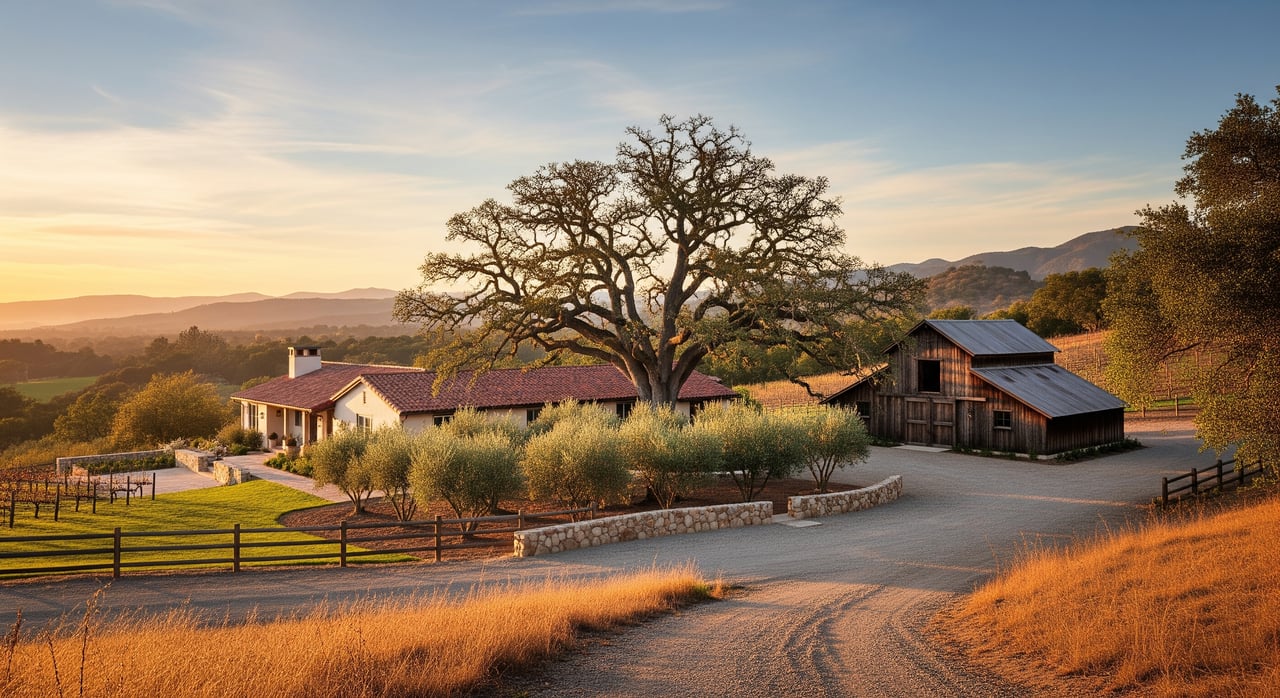
Own or eyeing acreage near Los Alamos and wondering how the Williamson Act affects your taxes and options? You are not alone. This state program can lower your property tax bill, but it also shapes how you use the land and how buyers view it at sale. In this guide, you will learn the basics, what to expect in Santa Barbara County, and the steps to take before you list, buy, or plan a change in use. Let’s dive in.
The Williamson Act, in plain English
The California Land Conservation Act of 1965, known as the Williamson Act, lets private landowners enter into recorded contracts that keep land in agricultural or compatible open-space uses. In exchange, the county assessor values the land based on agricultural use value instead of full market value. That often reduces the property tax assessment compared to parcels valued for development potential.
These contracts are authorized by the state and administered locally by counties. In Santa Barbara County, Planning and Development and the County Assessor handle local contracts and assessments. The California Department of Conservation provides statewide policy guidance and maintains maps and data.
How contracts work in Santa Barbara County
Contract length and renewal
Most Williamson Act contracts run for 10 years and renew automatically each year. The contract is recorded against the parcel, runs with the land, and binds future owners. Some counties also offer Farmland Security Zones, which are similar but typically run longer, often 20 years, with deeper tax benefits and stricter limits. Ask Santa Barbara County staff whether any FSZ options apply to your parcel type and location.
How taxes are calculated
Under a Williamson Act contract, your property taxes are based on the land’s agricultural use value. The County Assessor uses use-value standards and local crop or ranch productivity data to calculate assessed value. Because this approach does not reflect development value, assessed values are often lower than open-market value in areas with development pressure.
Ending or changing a contract
There are two main paths. Nonrenewal starts a gradual phase-out of tax benefits and restrictions. A common timeline is a nine-year transition period as the contract winds down, with assessed value moving toward market value each year. Cancellation ends a contract before the term or nonrenewal period, but it is hard to obtain. It usually requires county approval, state notification, public hearings, and environmental review under CEQA. Expect a longer, costlier, and uncertain process if you seek cancellation.
What it means in Los Alamos
Northern Santa Barbara County around Los Alamos includes vineyards, specialty crops, grazing operations, and ranch land. These are the types of uses often enrolled in the Williamson Act. For an active farm, the tax savings can improve cash flow and support long-term operations.
At the same time, the contract functions as an encumbrance. It limits non-agricultural development that conflicts with the contract. If you plan to sell, this can narrow the buyer pool to those who want agricultural use and lower taxes, and it often reduces price compared to unrestricted acreage with development potential.
Taxes, value, and pricing strategy
Appraisals to expect
If you plan to list or refinance, an appraisal may consider two views of value. One is the as-restricted value, which reflects agricultural use under the contract. The other is the highest and best use value, which can assume development potential once a contract is fully ended. If you or a buyer aim to change use, the nonrenewal or cancellation timeline, cost, and risk must be factored into pricing and negotiations.
Modeling your tax savings
Ask the County Assessor for an estimate of current assessed value under the Williamson Act and a comparison to market value. That will help you quantify the tax benefit. Keep agricultural production records, such as crop yields or grazing income, since these can support the use-value approach and help buyers evaluate ongoing operations.
Selling acreage under contract
Marketability and buyer pool
A Williamson Act contract can be a selling point for buyers who want working land and lower property taxes. It can also deter buyers who want short-term development. Position your property clearly for its best use, and set expectations on what the contract allows.
Disclosures and escrow focus
The contract remains with the land at sale, and buyers inherit its terms and tax status. Provide a complete disclosure package that includes the recorded contract, recent property tax bills, a title report, and any county confirmations of enrollment. Include zoning and General Plan designations, and note any nonrenewal or cancellation filings from past owners.
Timing and negotiations
If a buyer wants to move away from agricultural use, discuss nonrenewal timelines early. A nine-year phase-out is common and affects both price and planning. Cancellation may be faster but is uncertain, can be expensive, and requires county approval with possible mitigation. Buyers and sellers should build realistic timelines into escrow and contingencies.
Buying acreage under contract
Due diligence checklist
Before you write an offer, gather:
- Recorded Williamson Act contract and any amendments.
- Recent property tax bills and assessor information showing current assessed value.
- County GIS or contract map showing enrollment status.
- Preliminary title report with any easements and recorded restrictions.
- Zoning and General Plan designations, plus any recent or pending land-use applications.
- Agricultural production records that affect use-value calculations.
- Any prior filings for nonrenewal or cancellation.
If you plan to develop
If your goal is non-agricultural development, plan for a long horizon. Nonrenewal usually takes years, and assessed value will move toward market value over that time. Cancellation requires an application, public process, and CEQA review, and it may not be granted. Talk with county planning staff early to understand feasibility, findings, and likely timelines.
Lending and estate planning
Lenders do underwrite loans on Williamson Act properties, and some use specific underwriting rules for restricted land. Bring your lender into the conversation during due diligence so loan terms reflect the contract. For estate planning, remember the contract runs with the land and continues to bind heirs or entities that receive the property.
Local contacts and pros to call
These resources can help you move from big-picture answers to parcel-specific facts:
- Santa Barbara County Assessor’s Office for use-value methodology and tax impact estimates.
- Santa Barbara County Planning and Development for contract status, nonrenewal or cancellation procedures, and zoning or General Plan details.
- County Recorder or your title company to obtain recorded contract documents.
- County Agricultural Commissioner or local farm bureau for local agricultural context and typical enrollment uses.
- Real estate attorney experienced with Williamson Act matters for contract questions and strategies.
- Land-use consultant or planner for development potential, CEQA, and cancellation feasibility.
- Appraiser experienced with agricultural land and Williamson Act valuation.
- CPA or tax advisor to model property tax and income effects.
Next steps checklist
Use this quick plan to decide whether to hold, sell, or change use:
- Confirm enrollment and status. Request the recorded contract, any amendments, and a county confirmation that the parcel is in good standing.
- Get the numbers. Ask the Assessor for current assessed value under use-value and an estimate of taxes under a nonrenewal phase-out.
- Clarify permitted uses. Review zoning and General Plan designations along with contract terms to understand what is allowed today.
- Model your timeline. If you are considering nonrenewal, map out a multi-year plan and how taxes will change over time.
- Price with precision. For a sale, consider both as-restricted value and potential future value, and align pricing with likely buyer profiles.
- Build your team. Engage county staff, an appraiser, a CPA, and an attorney if you are weighing nonrenewal or cancellation.
Ready to make a move?
Whether you are a long-time ranch owner in Los Alamos or a buyer exploring acreage for vines, horses, or open space, getting the Williamson Act right is essential. A clear plan can protect your tax position and your long-term goals for the land. If you want local, boutique guidance backed by strong marketing reach, connect with Dianna Zlaket for tailored advice and a pricing or purchase strategy that fits your timeline and use. Request a Free Home Valuation.
FAQs
Does a Williamson Act contract prevent selling my land in Santa Barbara County?
- No. You can sell at any time. The contract runs with the land, so the buyer inherits the terms and the property’s tax status.
Will I owe back taxes when I sell a Los Alamos acreage under the Williamson Act?
- No automatic payback is triggered by a sale. Taxes follow assessed value and contract status, and they move toward market value if nonrenewal or cancellation occurs.
Can I subdivide or build a home on Los Alamos land under a Williamson Act contract?
- The contract limits non-agricultural conversion. Some agricultural uses may include dwellings where allowed by zoning and county rules. Check with county planning for specifics.
How long does nonrenewal take before development is possible in Santa Barbara County?
- Nonrenewal typically involves a multiyear phase-out, commonly about nine years. Assessed value and restrictions shift during that period toward market conditions.
Are there financial incentives beyond lower property taxes with the Williamson Act?
- The primary incentive is reduced property taxes based on use value. Other programs, such as conservation easements or grants, are separate and not automatic with enrollment.
Who should I contact first about my parcel’s Williamson Act status in Santa Barbara County?
- Start with County Planning and Development for contract status and procedures, and the County Assessor for use-value assessment details and tax estimates.