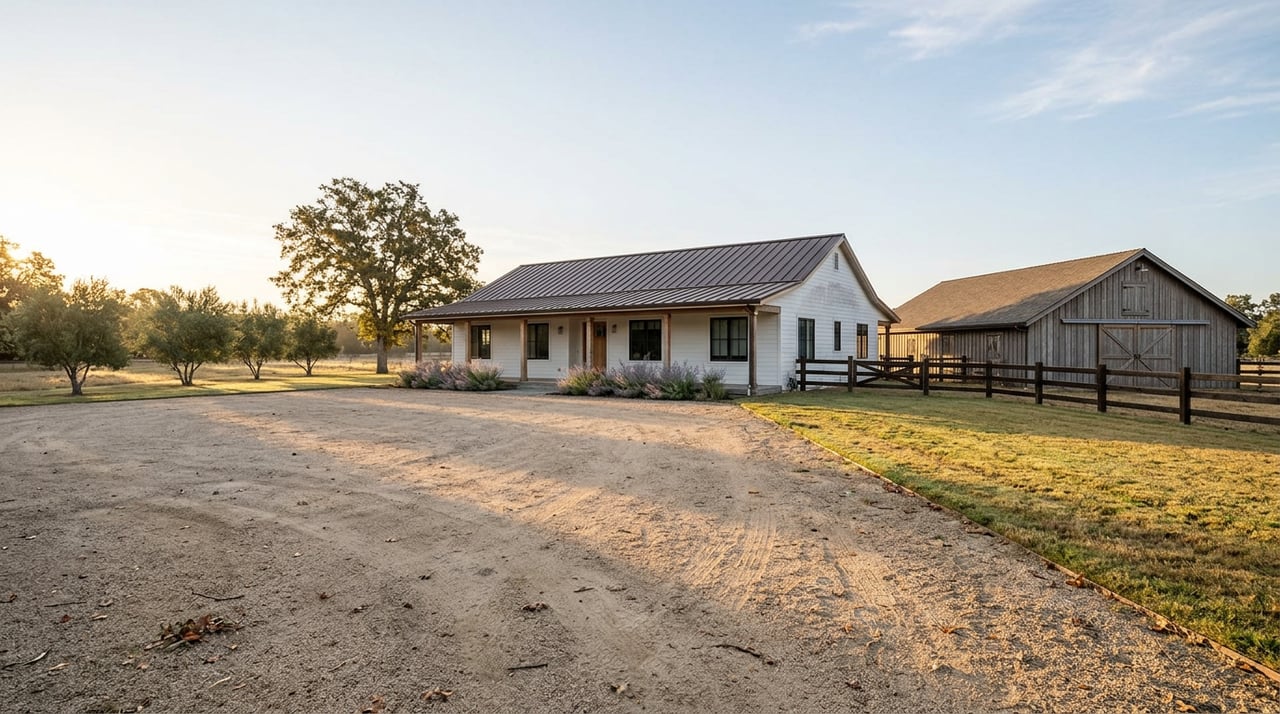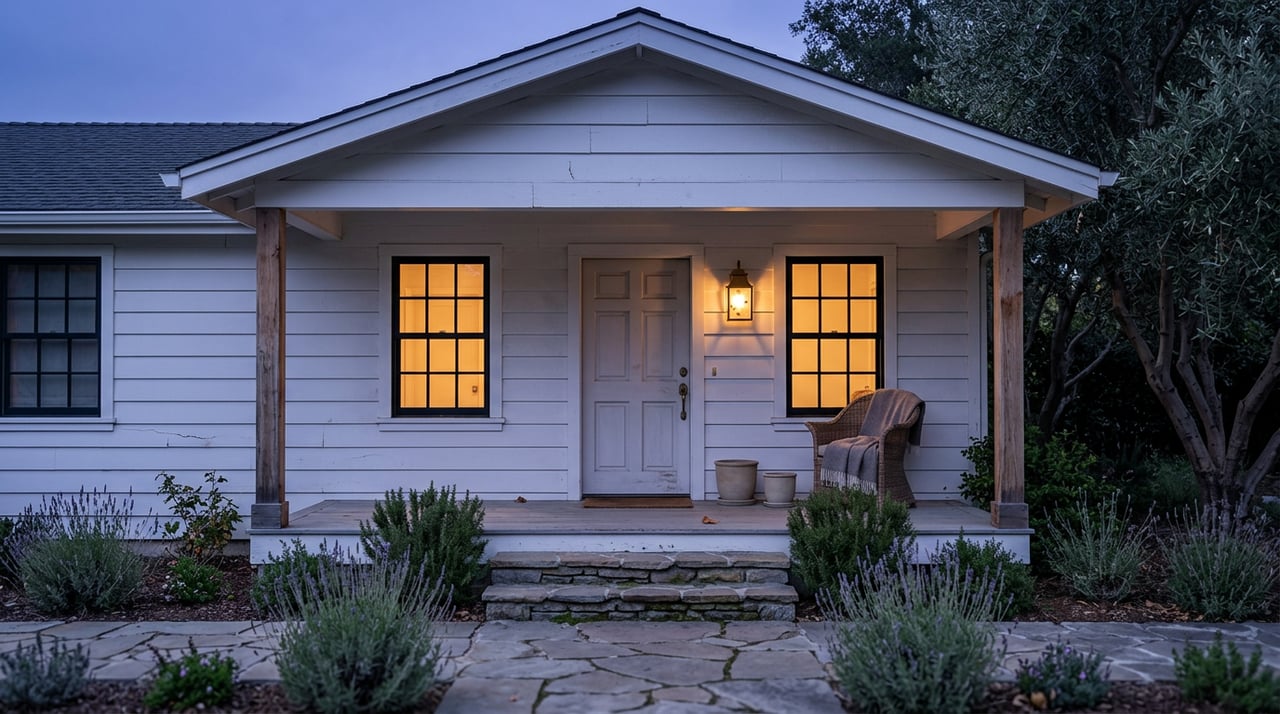
If you've read anything about Lompoc real estate in the past two years, you've probably read some version of the same headline: priced-out Santa Barbara buyers are discovering a cheaper coastal alternative, home values are climbing, and days on market are shrinking. All of that is true. What most of those stories leave out is the part that actually matters if you're deciding whether to buy here now or wait: for most of the past two decades, almost nobody built a new house in Lompoc to meet that demand.
That's not a market quirk. It was a structural freeze, and the city only fixed it in 2025. Understanding why tells you something the median price alone can't.
A city stuck at the same size for twenty years
At Lompoc's 2026 State of the City address, held at the Dick DeWees Community and Senior Center and hosted by the Lompoc Valley Chamber of Commerce, Mayor Jim Mosby laid out a number that should reframe how you think about this market. Lompoc's population has held at roughly 43,000 for two decades. Mosby called it the only city in California he knows of that's been stuck in that kind of rut.
Housing construction tells the same story. By Mosby's own account, Lompoc had zero new single-family residences built in each of two consecutive recent years. That's not a slowdown. That's a market where home values rose purely on scarcity, with essentially no supply response at all. Prices climbed 54% between July 2019 and July 2024, according to Redfin data reported by SFGate, while the number of days a home sat on market fell from 43 to 31 over that same window. Buyers kept showing up. Builders didn't.
If you've been assuming Lompoc is simply an undiscovered bargain waiting to normalize toward Santa Barbara or Santa Ynez Valley pricing, that's only half the picture. The other half is that the city itself had built-in disincentives to add housing, and nobody addressed them until recently.
The lever the city actually pulled
In 2025, Lompoc cut its development impact fees, the charges builders pay to fund infrastructure tied to new growth, by 92%. Mosby described the old fee structure as cost-prohibitive for developers, which is a polite way of saying it made building here a bad bet.
"We were able to justify and reduce our impact fees by 92%."
That's the mechanism. Not a demand shift, not a zoning overhaul, but a deliberate policy decision to remove the specific cost that had been keeping builders away. It's the kind of detail that never shows up in a median-price chart but explains almost everything about what happens next.
The timing wasn't random either. City officials are positioning the fee cut against a real external catalyst: Vandenberg Space Force Base. Jennifer Green-Lanchoney, the base's public affairs director, told the same audience that projected growth tied to the Sentinel missile program, expanded commercial launch activity, and additional aerospace infrastructure could bring roughly 10,000 new jobs to the base by 2030. She also confirmed Blue Origin is moving forward with new construction near the harbor. Add in SpaceX's increasing launch cadence at the base, and you have a city trying to get ahead of a labor influx it hasn't had to plan for in a generation.
What's actually breaking ground
The fee cut has already translated into named projects, not just intentions.
- River Terrace, a 257-unit Williams Homes development on a 25-acre site off Highway 246, is under construction on the southeast edge of Lompoc, just north of the Wine Ghetto and parallel to River Park.
- Burton Ranch, approved after several addendums cleared City Council, will bring up to 476 single-family and multi-family homes once construction starts.
Mosby told the Chamber audience that the city should clear the 300-unit mark this year, though he was careful to add that not everything currently lined up will be finished on that timeline. That caveat matters. This pipeline is new, it's policy-driven, and it hasn't been tested through a full construction cycle yet. If you're timing a purchase around new inventory arriving in Lompoc, treat these numbers as directionally real but not a guaranteed delivery date.
The affordable housing math that changes what gets built
Here's a detail that's easy to miss but shapes what these new subdivisions will actually look like when they're finished. Santa Barbara County requires a minimum share of units in new developments to be designated affordable. In Lompoc and Santa Maria, that inclusionary requirement sits at 10%. In Santa Ynez and the South Coast, it's 15%.
At River Terrace, Williams Homes chose to pay in-lieu fees rather than build the required affordable units on-site, a route the city's ordinance allows. Based on the project's 257-unit count, that would have meant 26 inclusionary units built either within the development or elsewhere in the city. Instead, the developer's per-unit fee payments are directed to Lompoc's first-time homebuyer program.
What that means for you as a buyer: the new construction coming out of River Terrace and similar projects won't necessarily include an on-site mix of affordable and market-rate homes. The affordability piece is being handled financially rather than architecturally, with the money flowing into a separate city program rather than into the subdivision itself. If mixed-income housing stock is part of what you're evaluating when you compare Lompoc to other Central Coast towns, that's a distinction worth understanding before you assume all new-construction neighborhoods look the same.
What this means if you're watching Lompoc right now
The obvious story, cheap coastal alternative, rising prices, fast sales, is accurate but incomplete. The fuller story is that Lompoc spent twenty years absorbing demand with almost no new supply, and the city has only just removed the specific policy barrier that caused that. You're not buying into a mature, self-correcting market. You're buying into the first real test of whether that correction holds.
That has practical implications. New construction pricing at projects like River Terrace and Burton Ranch will be shaped by builder cost structures under the new fee schedule, not by whatever the resale market has done over the past few years. And because the fee cut is a city policy rather than a market condition, it's also reversible in a way that organic supply growth isn't. If you're comparing Lompoc to Buellton, Solvang, or the Santa Ynez Valley towns, the fair comparison isn't just square footage per dollar. It's which of those markets is building because of durable demand and which is building because of a fee schedule that could, in theory, be revisited by a future council.
None of that makes Lompoc a bad place to buy. It makes it a market where the story is still being written, and where understanding the mechanism behind the headlines gives you a real advantage over someone reading the median price and assuming they already know what it means.
A few questions that come up
Will Lompoc's impact fees go back up? Nothing in the reporting from this year's State of the City suggests an imminent reversal, but fee schedules are set through city council action and can change with future budget cycles. Anyone timing a purchase around new-construction pricing should confirm current fee levels directly with the city before assuming today's numbers hold.
Is Lompoc still less expensive than the Santa Ynez Valley towns? Broadly yes, though the gap has been narrowing as prices rose over the past several years even without new supply. The construction now underway is one of the first real tests of whether added inventory eases that pressure or simply gets absorbed by continued demand from Vandenberg's growth.
Does the aerospace growth at Vandenberg actually affect home values, or is it speculation? The 10,000-job projection tied to the Sentinel program and expanded launch activity came directly from Vandenberg's public affairs office, not from a real estate source with an incentive to inflate it. That doesn't guarantee it materializes on schedule, but it's a specific, named driver rather than a vague growth story.
If you're weighing Lompoc against the Santa Ynez Valley towns and want a read on how a specific property or neighborhood fits into this shifting supply picture, that's exactly the kind of question worth a real conversation. Dianna Zlaket works across the Central Coast and can walk you through what a Free Home Valuation looks like on your timeline, whether you're comparing new construction in Lompoc or an established home further up the valley.